
Andrew Ho is a Director of Revenue at HCM TradeSeal, bringing over six years of experience in the Human Capital Management industry. He specializes in demonstrating how HCM TradeSeal helps organizations streamline prevailing wage and union reporting compliance.
What Is the Davis-Bacon Act?
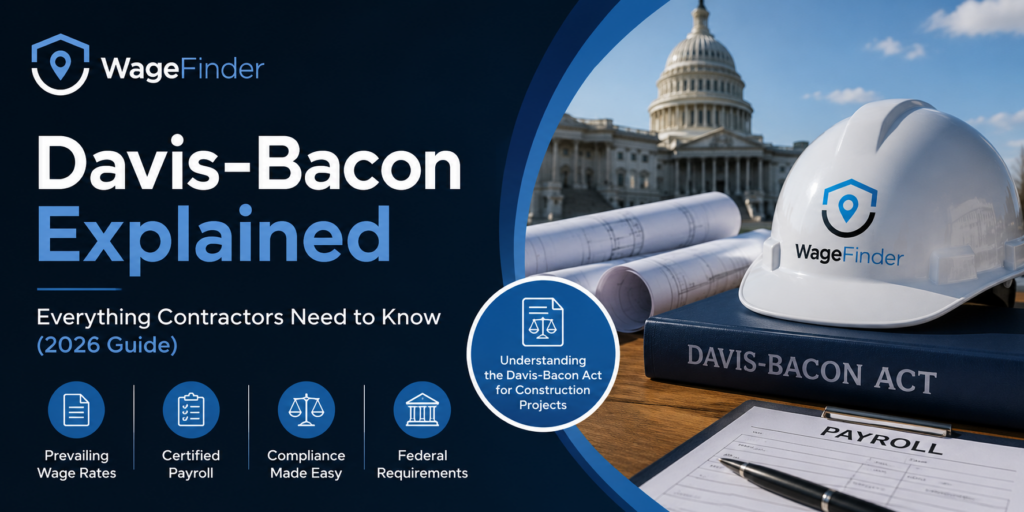
The Davis-Bacon Act is a federal labor law that requires contractors and subcontractors working on federally funded or federally assisted construction projects to pay workers at least the locally prevailing wage and applicable fringe benefits for their job classification.
Originally enacted in 1931, the Davis-Bacon Act helps ensure fair wages on public construction projects by preventing contractors from undercutting local labor standards.
Whether you’re a contractor, payroll professional, HR manager, or project manager, understanding Davis-Bacon requirements is critical to avoiding costly compliance issues.
What Is a Prevailing Wage?
A prevailing wage is the hourly wage, fringe benefits, and overtime requirements determined by the U.S. Department of Labor for specific job classifications within a geographic area.
Unlike a standard hourly wage, prevailing wage requirements often include:
- Base hourly wage
- Required fringe benefits
- Overtime requirements
- Holiday pay (when applicable)
- Apprentice wage rules
These rates vary depending on:
- State
- County
- Type of construction
- Worker classification
When Does the Davis-Bacon Act Apply?
The Davis-Bacon Act generally applies when:
- The project is federally funded or federally assisted.
- The contract exceeds $2,000.
- Construction, alteration, or repair work is being performed on public buildings or public works.
Examples include:
- Highways
- Schools
- Federal office buildings
- Water treatment facilities
- Airports
- Bridges
- Military installations
Many state and local public works projects also have prevailing wage requirements, even when the federal Davis-Bacon Act does not apply.
Who Must Comply?
Compliance responsibilities extend beyond the general contractor.
Organizations that may need to comply include:
- General contractors
- Subcontractors
- Payroll departments
- HR teams
- Project managers
- Government agencies overseeing construction
Failure to comply can result in back wage assessments, payment withholding, contract termination, or debarment from future federal projects.
How Are Prevailing Wage Rates Determined?
The U.S. Department of Labor publishes Wage Determinations that specify required wages for each worker classification in a given area.
Rates are based on factors such as:
- Geographic location
- Construction type (Building, Heavy, Highway, Residential)
- Job classification
- Collective bargaining agreements
- Local wage surveys
Since wage determinations are updated periodically, contractors should verify that they are using the correct and most current rates before processing payroll.
Davis-Bacon vs. State Prevailing Wage Laws
Many states have their own prevailing wage laws in addition to the federal Davis-Bacon Act.
For example:
- California has one of the most comprehensive state prevailing wage programs.
- New York maintains state-specific prevailing wage schedules.
- Pennsylvania, Illinois, Washington, and several other states also enforce state prevailing wage requirements.
Depending on the project, contractors may need to comply with both federal and state requirements.
Common Davis-Bacon Compliance Mistakes
Many compliance issues stem from administrative errors rather than intentional violations.
Common mistakes include:
- Using outdated wage determinations
- Incorrect worker classifications
- Miscalculating fringe benefits
- Missing certified payroll deadlines
- Incorrect overtime calculations
- Failing to document apprentices properly
- Inaccurate project assignments for employees working across multiple jobs
Even small payroll errors can become significant during an audit.
Certified Payroll Reporting
Most Davis-Bacon projects require contractors to submit Certified Payroll Reports, commonly using Form WH-347.
These reports typically include:
- Employee information
- Hours worked
- Job classification
- Hourly wage
- Fringe benefits
- Gross wages
- Payroll deductions
- Net pay
Accurate certified payroll reporting is one of the most important aspects of Davis-Bacon compliance.
How to Find Current Davis-Bacon Wage Rates
The fastest way to determine the correct prevailing wage is to search by:
- State
- County
- Construction type
- Worker classification
Using an organized wage database can significantly reduce the time spent searching through wage determinations and help ensure you’re referencing the correct rates.
Best Practices for Staying Compliant
To reduce compliance risk:
- Verify wage determinations before every project.
- Review worker classifications carefully.
- Keep detailed payroll records.
- Submit certified payroll reports on time.
- Monitor wage determination updates throughout the life of the project.
- Train payroll and HR teams on prevailing wage requirements.
- Use technology to validate wage calculations before payroll is processed.
A proactive compliance process can help prevent costly corrections and reduce audit risk.
Frequently Asked Questions
What is the Davis-Bacon Act?
The Davis-Bacon Act requires contractors on many federally funded construction projects to pay workers at least the locally prevailing wage and fringe benefits.
What projects are covered?
Most federal construction contracts exceeding $2,000 for public buildings or public works are covered, though additional requirements may apply depending on the funding source and contract.
Is Davis-Bacon the same as prevailing wage?
Not exactly. Davis-Bacon is a federal law that establishes prevailing wage requirements for many federal construction projects. States may also have their own prevailing wage laws.
What happens if a contractor doesn’t comply?
Potential consequences include back wage payments, contract funds being withheld, contract termination, financial penalties where applicable, and possible debarment from future federal contracts.
How often do wage rates change?
Wage determinations can be updated periodically. Contractors should always verify they are using the correct determination for the specific project before processing payroll.
Final Thoughts
Understanding the Davis-Bacon Act is essential for contractors working on public construction projects. From identifying the correct wage determination to classifying employees accurately and submitting certified payroll reports, every step plays a role in maintaining compliance.
Whether you’re researching prevailing wage rates for a new project or building a long-term compliance process, having quick access to reliable wage information can save time and reduce risk.
If you’re looking for an easier way to search prevailing wage rates by state, county, and worker classification, WageFinder provides a streamlined resource to help contractors, payroll teams, and compliance professionals locate the information they need.
About
WageFinder, powered by HCM TradeSeal, makes prevailing wage research faster and easier.
Built from HCM TradeSeal’s expertise in prevailing wage and labor compliance, WageFinder provides access to more than 1.8 million federal, state, and local prevailing wage records in one searchable platform.
Instead of spending time searching through government websites, PDFs, and other sources, users can quickly find the wage information they need. For organizations looking to bring prevailing wage data directly into their own systems, WageFinder also offers API access for more streamlined workflows. Find the right rates, faster.